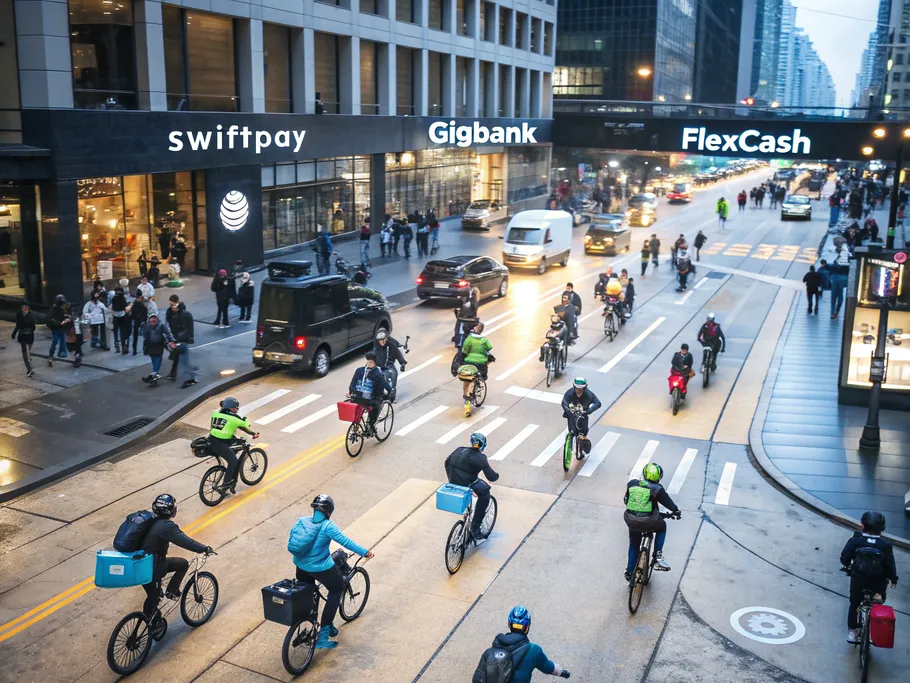
Moves Financial: Startup Case Study – Empowering Gig Workers
Published: December 04, 2025
What do rideshare drivers, food delivery personnel, freelance writers, graphic designers, app-based tutors, dog walkers, and handymen all have in common? They are the backbone of the gig economy—earning their living through part-time jobs, temporary contracts, or on-demand services.
Unlike traditional employees, gig workers often face unique challenges: lack of benefits, lack of traditional banking tools tailored for irregular cash flow, and no easy way to share in the value they help create.
In early 2020, a bold startup stepped in, aiming to address these pain points by building an online banking platform specifically designed for gig workers. For a while, it looked like a game-changer in the growing freelance economy. But by 2024, the startup quietly shut its doors—another casualty in the competitive world of fintech. Its name?
Moves Financial
Moves Financial was a Toronto-based fintech startup founded in 2020 that focused on providing mobile-first banking solutions for gig workers in Canada and the United States. It aimed to tackle the unique financial challenges faced by independent contractors, offering services such as no-fee banking, early payouts, and share ownership in gig platforms through its innovative Moves Collective.
Clients: US-based independent gig workers, primarily those working for platforms like Uber, Lyft, DoorDash, Grubhub, Target, and Amazon. They are younger individuals seeking flexibility and control over their work and finances, often facing unpredictable income streams and limited access to traditional financial products.
It’s Like: Chime but with an ownership twist for the gig economy.
Moves Financial provided mobile-first banking services like Chime, catering specifically to the financial needs of gig workers. Both platforms offered no-fee banking, early access to earnings, and tools to manage income volatility.
However, Moves Financial differentiated itself through:
Focus on Gig Workers: While Chime targets a broader underbanked population, Moves Financial was hyper-focused on the unique needs and challenges of gig workers.
Challenges Faced by Gig Workers
Financial Instability: Gig workers often face unpredictable income streams, making it difficult to budget, save, and access traditional financial products.
Lack of Benefits: Traditional employment benefits like health insurance and retirement savings are typically absent in gig work, leaving individuals financially vulnerable.
Fragmented Income: Managing earnings from multiple gig platforms can be complex and time-consuming.
Limited Access to Credit: Traditional credit scoring models often disadvantage gig workers due to their income variability, making it harder to secure loans.
Lack of Ownership and Voice: Gig workers contribute significantly to the success of platforms but often lack the same rights and representation as traditional employees.
Solutions Offered
All-in-One Banking App: Moves Financial provided a dedicated banking app designed for gig workers, offering a no-fee spending account, early access to earnings, and tools to track and manage income from multiple platforms.
Instant Cash Advances: The platform offered quick access to funds through interest-free cash advances, helping users cover immediate expenses.
Moves Collective:This program allowed users to earn shares in major gig platforms simply by using the Moves Financial app, fostering a sense of ownership and collective bargaining power.
Debit Card with Cash Back: Moves Financial offered a debit card with perks like cash back on gas purchases, catering to the needs of gig workers like rideshare drivers.
Financial Education and Advocacy: The company aimed to empower gig workers through financial literacy resources and advocated for their rights through initiatives like shareholder proposals.
Founding Story
When and How Founded: The spark for Moves Financial came in late 2019, when Matthew Spoke, drawing from his blockchain background, realized the gig economy’s lack of financial support after a conversation with an Uber driver.
By December 2019, the initial ideation was underway, and in early 2020, as the pandemic emerged, Moves launched a COVID-19 resource portal. Recognizing the pandemic’s impact on gig workers, Moves expedited plans and launched Phase 1, offering personal unsecured loans in Canada in April 2020. It added a new loan product in May and expanded to Alberta and British Columbia in June.
By 2021, those early efforts culminated in the launch of Moves’ core mobile app, complete with the foundation for the Moves Collective.
Key Early Figures:
Matthew Spoke (Founder & CEO): Brought blockchain expertise from founding AION Network and Nuco.
Sam Pajot-Phipps (VP of Growth): Had expertise in business technology, operations, and strategy from his former roles at Deloitte Canada, Nuco, and AION.
Stephanie Overholt (VP Product & Engineering): Previously Head of Product Management at Borrowell.
Ian Chan (GM & Chief Finance Officer): Extensive leadership experience from Deloitte Canada and Hewlett-Packard Enterprise.
Challenges:
Navigating the complexities of the financial services industry.
Building trust and attracting users in a competitive market.
First Results & Growth:
Early adoption of loan products during the pandemic.
Expansion into new Canadian provinces.
Development of the mobile app and the innovative Moves Collective concept.
Innovation & Technology:
Leveraged blockchain technology principles for secure and transparent financial services.
Developed a user-friendly mobile app to centralize gig workers’ financial management.
Introduced the Moves Collective to empower gig workers with ownership in the platforms they work for.
The global gig economy market size was valued at an estimated $556.7 billion in 2024 and is projected to reach $1,147.14 billion by 2033, growing at a compound annual growth rate (CAGR) of 10.61%. This growth is driven by digital platforms facilitating flexible, on-demand work, with the market encompassing freelance services, ride-sharing, and delivery services.
North America held the major market share for more than 40% of the global revenue with a market size of USD 224.5 billion in 2024 and will grow at a compound CAGR of 15.4% from 2024 to 2031.
Annualized gig earnings across all members reached nearly $59 million within a year of launching the U.S. app in March 2021.
Potential New Markets: Gig workers across other continents.
Growth Trends:
Continued growth of the gig economy is expected.
Increasing demand for financial services tailored to the needs of gig workers, such as income smoothing, access to credit, and financial planning tools.
Competitor Landscape
Moves Financial operated in a competitive fintech and gig economy financial services market.
Key competitors included:
Novo: A commercial bank based in Miami, FL, offering banking services for small businesses and freelancers.
Lili: A financial software provider catering to freelancers.
PayFare: Mobile banking and payment solutions for gig workers.
Gig Wage: Payment solutions and workforce management for contractors.
Tapcheck: Earned-wage access via an on-demand pay platform.
Friendly Lender: Alternative lending and financial service provider.
iCASH: Online lending platform.
Other Financial Apps Serving Gig Workers:EarnIn, Dave, MoneyLion, Fundo, Ualett, Giggle Finance, Gerald, Branch, Para, and Catch.
Marketing & Sales
Main Positioning Values: Flexible gig financing
Website & Socials
The company’s official website is movesfinancial.com. All its social media handles are inactive. Thus, no traffic is recorded from direct, referral, organic, paid, or social channels, with no notable data on top countries or social media engagement.
Target Audience: Moves Financial specifically targeted independent gig workers in Canada and the United States, particularly those working for platforms like Uber, Lyft, DoorDash, Grubhub, Target, and Amazon. This indicates a focus on a younger demographic (Millennials and Gen Z) who are more likely to engage in gig work and utilize mobile banking solutions.
Source: Wealth Awesome
Customer Acquisition:
App Store Visibility: Leveraged placement in the Apple App Store Banking category for organic user acquisition.
Referral Programs: Implemented referral programs to incentivize existing users to bring in new customers.
Strategic Partnerships: Collaborated with companies like Astra to access new user bases.
Public Relations: Actively engaged in PR, issuing press releases, and leveraging media coverage to raise awareness.
Content Marketing: Utilized thought leadership content from the founder, Matthew Spoke, published on platforms like Forbes.comand TechCrunch.
Social Media: Maintained an active presence on various social media platforms to engage with gig workers and promote services.
Value Proposition: Moves Financial emphasized its understanding of the unique financial challenges faced by gig workers, offering tailored solutions like income aggregation, no-fee banking, instant cash advances, and the opportunity to earn shares in the platforms they worked for through the Moves Collective.
Product & Innovation
Moves Collective
This share ownership program was a unique and potentially disruptive innovation within the fintech industry. It aimed to realign the economic incentives of gig work by giving workers a direct stake in the platforms they helped to build.
Hyper-Focus on Gig Workers
Source: Awesome Wealth
While other fintech companies offered services for freelancers and independent contractors, Moves Financial stood out by exclusively targeting gig workers and tailoring its products and features to their specific needs.
Integration of Financial Services and Advocacy
Moves Financial went beyond traditional banking by incorporating advocacy for gig workers’ rights into its mission and actively engaging in initiatives to improve their working conditions. For example, in 2021, the company advocated for the appointment of an independent director to Uber’s Board; someone who had direct personal understanding of platform work experience.
Financials & Metrics
Revenue Sources
Interchange Fees: Generated from debit card transactions made using the Moves Financial Visa® Debit Card issued by Blue Ridge Bank N.A.
Interest Income: Earned from loans provided to gig workers in Canada during their initial operational phase.
Transfer Fees: Collected for real-time transfers facilitated through their partnership with Astra.
Funding and Investments: Secured a total of $14.1 million in seed funding across two rounds: $9.1 million in May 2020 and $5 million in May 2022.
Employee Count: Varied over time, with estimates ranging from 1-10 employees in early 2020 to around 35 by late 2021/early 2022. Levels.fyi reported 31 employees, PitchBook indicated 38 employees as of 2023, and LinkedIn estimated 11-50 employees.
User Base: Surpassed 10,000 members by the end of 2022, with collective annualized gig earnings approaching $59 million.
Structure & Culture
Internal Structure
Leadership: The company was led by a team with diverse experience in blockchain, finance, and technology. This suggests a potentially flat organizational structure with a focus on collaboration and innovation. Key personnel included:
Matthew Spoke, Founder & CEO
Sam Pajot-Phipps, VP of Growth.
Stephanie Overholt, VP Product & Engineering.
Ian Chan, GM & Chief Finance Officer.
Culture and Values
Culture
Inclusiveness: Moves Financial fosters an inclusive, welcoming workplace culture that emphasizes diversity, equity, and inclusion (DEI), led by initiatives such as inclusive language use and cultural awareness events. Their DEI approach is voluntary and designed to create learning opportunities rather than mandatory training, supporting engagement and inclusiveness.
Employee Welfare: Moves Financial’s culture values employee well-being and a sense of belonging, evidenced by consistent high employee satisfaction. The company organized social and cultural events that brought together employees across different time zones in the U.S. and Canada to promote bonding and cultural learning, such as sessions on sign language and celebrations of Lunar New Year and Black History Month.
Transparency: Moves Financial supports transparent communication and feedback to continuously build an employee-focused culture.
Values:
Customer Focus: The development of the Moves Collective and the company’s rapid response to the COVID-19 pandemic with tailored loan products demonstrate a strong customer focus and a willingness to adapt to the evolving needs of gig workers.
Empowerment: Moves Financial’s mission is centered around empowering gig workers and addressing their unique financial needs. This indicated they valued user-centricity, advocacy, and social impact.
Impact & Success
Customer Feedback
Customer reviews of Moves Financial constitute both positive and negative ones.
Positive: Christopher Liev did an in-depth review of the platform on Awesome Wealth. In his words, “Moves Financial gets the Wealthawesome recommendation and seal of “awesome” for starting something that might actually make a difference in a lot of independent workers’ lives.”
Negative: Moves Financial has several negative reviews on TrustPilot. A review by Neshia Davis, who gave them a 1-star rating, reads, “Wish I could rate a 0. This company is a scam. No phone number to contact, you can only speak to bots. And they close your account with no warning & refuse to tell you why due to “security” reasons. So shady. Do not use them!!”
Competition: Moves Financial operated in a highly competitive fintech and gig economy financial services market.
Profitability: While demonstrating user growth, achieving sustainable profitability in a competitive market was likely an ongoing challenge.
Scaling the Moves Collective: Implementing and scaling the innovative Moves Collective concept, including navigating securities regulations and shareholder rights, could have presented significant hurdles.
Future Plans
Moves Financial ceased operations in April 2024, and no future plans are available.
Reason For Closure
Moves Financial did not formally announce its closure on its website; the last post on its blog was in May 2023. There was equally no announcement on its social media channels, and to date, no detailed public explanation has been made.
Industry context suggests that the shutdown may have been driven by factors such as loan defaults or operational challenges that are common among fintech startups and niche financial institutions. These challenges were further compounded by broader headwinds in the banking sector during 2023, including financial instability and shifts in customer behavior that contributed to an uptick in bank closures.
News of the closure was highlighted in a YouTube video by the Gig Economy Podcast, which shared both the announcement and a screenshot of the email the company sent directly to its users.
Key Takeaways for Entrepreneurs
Even though Moves Financial failed in keeping its business moving, we can still learn a thing or several from it:
Find the underserved, not just the underserved market: Don’t just chase large markets; look for niches within those markets that are overlooked. Moves didn’t just target the gig economy; they hyper-focused on the financial needs of gig workers, a nuanced difference that resonated.
Turn a problem into ownership, literally: Moves identified a lack of ownership and voice as a pain point for gig workers. Their solution? Giving them actual shares in the platforms they worked for. Think outside the box when addressing user pain points.
Marketing is about reframing, not just messaging: Moves cleverly positioned their loan cost as a “service fee,” sidestepping the negative connotations of high interest rates. Don’t be afraid to reframe your offering to better align with customer perception.
Partnerships are force multipliers: Moves leveraged partnerships with Bumped and Astra to quickly scale features and reach. Identify strategic partners who complement your offering and accelerate your growth.
Data transparency builds trust and desire: Moves openly showcased the collective shares owned by its users. This transparency not only built trust but also created a gamified incentive for users to participate more actively.
Combine the expected with the unexpected: Moves could have stopped at being a banking app for gig workers. But they went further by incorporating advocacy and ownership, creating a multi-faceted value proposition that resonated deeply with their target audience.
PPBlessing
Writer & Editor
PPBlessing is a writer, editor, and entrepreneur with a keen eye for detail and a passion for research-driven content. Her background in biology honed her meticulous approach to writing, allowing her to break down complex topics in finance, business, marketing, and economics into clear, accessible insights. She has served as Chief Editor for Crusaders Christian Magazine and contributed to major organizations, magazines, and anthologies, including the United Nations Economic Commission for Africa and Writers Space Africa Magazine. In addition to writing and editing, she runs her own small business.
Email subscription is available ONLY TODAY (oh, okay, and tomorrow).
Surely, we respect your inbox! Unsubscription works every day.
Hey there! 👋 Just curious…
We’d love to tailor your experience — which of these best describes you?
Manage Consent
To provide the best experiences, we use technologies like cookies to store and/or access device information. Consenting to these technologies will allow us to process data such as browsing behavior or unique IDs on this site. Not consenting or withdrawing consent, may adversely affect certain features and functions.
Functional
Always active
The technical storage or access is strictly necessary for the legitimate purpose of enabling the use of a specific service explicitly requested by the subscriber or user, or for the sole purpose of carrying out the transmission of a communication over an electronic communications network.
Preferences
The technical storage or access is necessary for the legitimate purpose of storing preferences that are not requested by the subscriber or user.
Statistics
The technical storage or access that is used exclusively for statistical purposes.The technical storage or access that is used exclusively for anonymous statistical purposes. Without a subpoena, voluntary compliance on the part of your Internet Service Provider, or additional records from a third party, information stored or retrieved for this purpose alone cannot usually be used to identify you.
Marketing
The technical storage or access is required to create user profiles to send advertising, or to track the user on a website or across several websites for similar marketing purposes.
To provide the best experiences, we use technologies like cookies to store and/or access device information. Consenting to these technologies will allow us to process data such as browsing behavior or unique IDs on this site. Not consenting or withdrawing consent, may adversely affect certain features and functions.
Functional
Always active
The technical storage or access is strictly necessary for the legitimate purpose of enabling the use of a specific service explicitly requested by the subscriber or user, or for the sole purpose of carrying out the transmission of a communication over an electronic communications network.
Preferences
The technical storage or access is necessary for the legitimate purpose of storing preferences that are not requested by the subscriber or user.
Statistics
The technical storage or access that is used exclusively for statistical purposes.The technical storage or access that is used exclusively for anonymous statistical purposes. Without a subpoena, voluntary compliance on the part of your Internet Service Provider, or additional records from a third party, information stored or retrieved for this purpose alone cannot usually be used to identify you.
Marketing
The technical storage or access is required to create user profiles to send advertising, or to track the user on a website or across several websites for similar marketing purposes.